Brief normalization
Translate the commercial request into a working specification: intended garment, composition, weave or knit construction, target GSM with tolerance, usable width, finish, color standard, care route and nominated test method.
Separate development samples from production evidence, record decisions at each gate and make the release criteria legible to sourcing, design and quality teams.
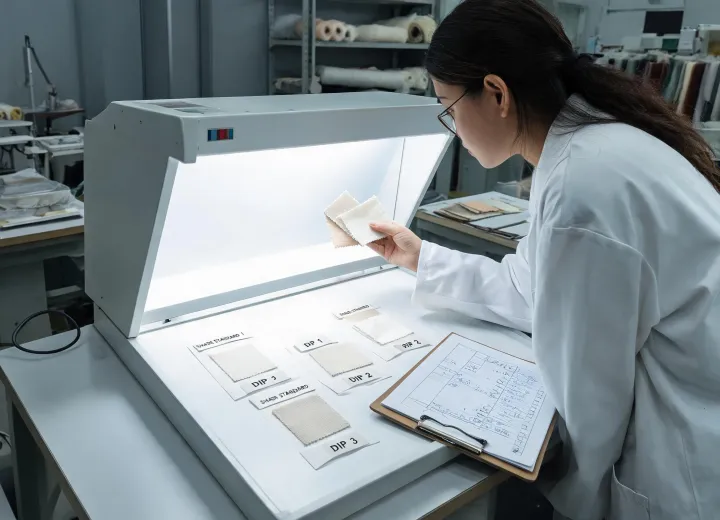
Translate the commercial request into a working specification: intended garment, composition, weave or knit construction, target GSM with tolerance, usable width, finish, color standard, care route and nominated test method.
Identify whether the decision requires a handloom, strike-off, lab dip, yardage sample or pre-production length. Each format answers a different question and cannot substitute for a bulk-lot inspection.
Clear acceptance language reduces arguments after cutting or garment washing.
The stronger brief also records who approves shade and physical results, which sample stage supports that decision, and which changes trigger a renewed approval before cutting begins.
A usable request includes the garment end use, expected care cycle, target quantity and destination market.